Achieved Milestones
-
1. Starting point and research conduct July 2025
I have taken the initiative to educate myself through articles and instructional videos as well as doing an in-depth market study was carried out conducted to assess the demand for oyster mushrooms in Rwanda, with a particular focus on Kigali. Unfortunately, the analysis pointed to a significant shortage of mushrooms in the market relative to…
-
2. Investments and production Oct 2025
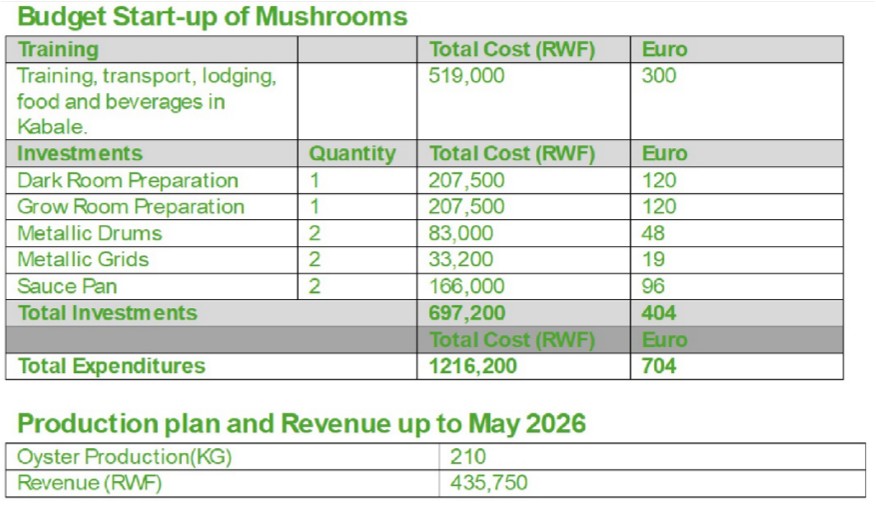
An overview of the financial expenditures required for the start-up phase, covering revenues, training, and operational costs, was prepared showing the total needed to be Rwf 1,216,200 (€ 704,–)
-

3. Funding Sept 2025
The initial costs of starting the company were financed by Skills and Business for Africa and a small portion of owner’s equity.
-
4. Mushroom training in Uganda Sept 2025
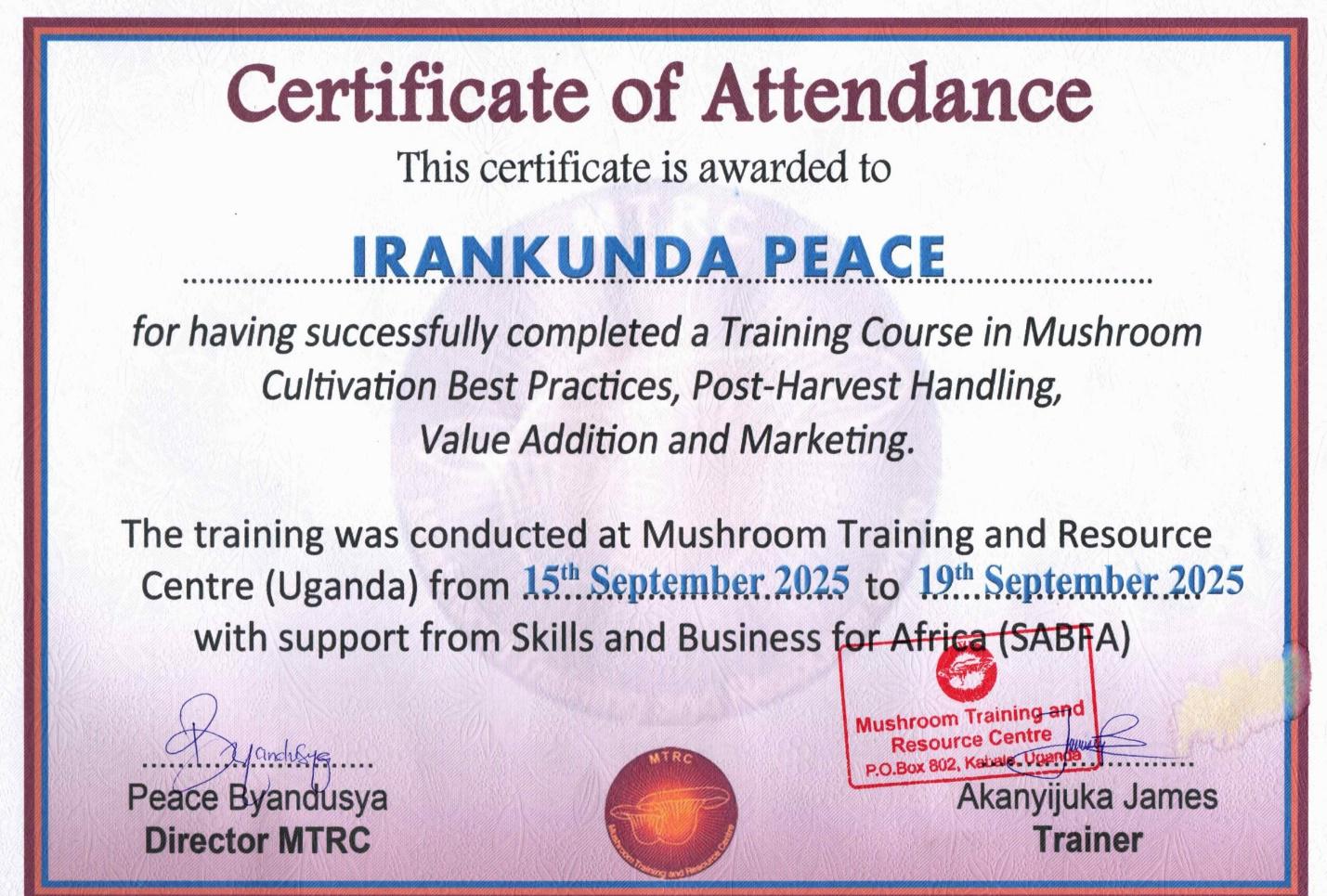
To strengthen my hands-on expertise in mushroom farming, I joined a training course conducted by the Mushroom Training and Resource Centre (MTRC) in Kabale, Uganda, in February 2025.
-
5. Equipment and farm set up Oct 2025
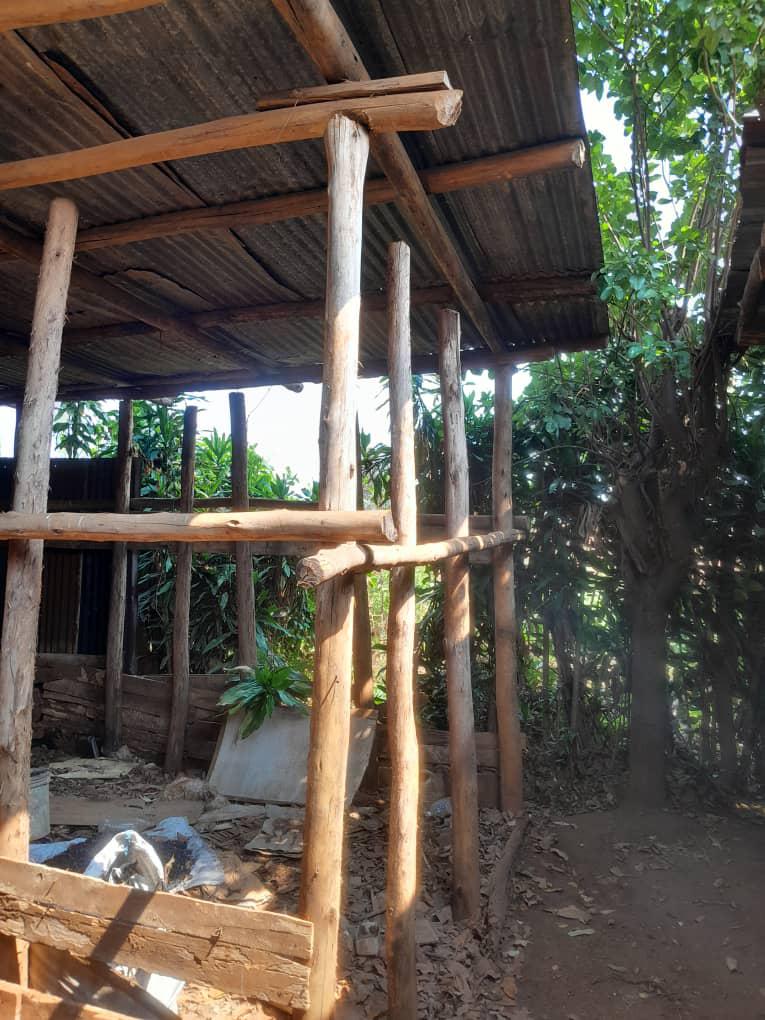
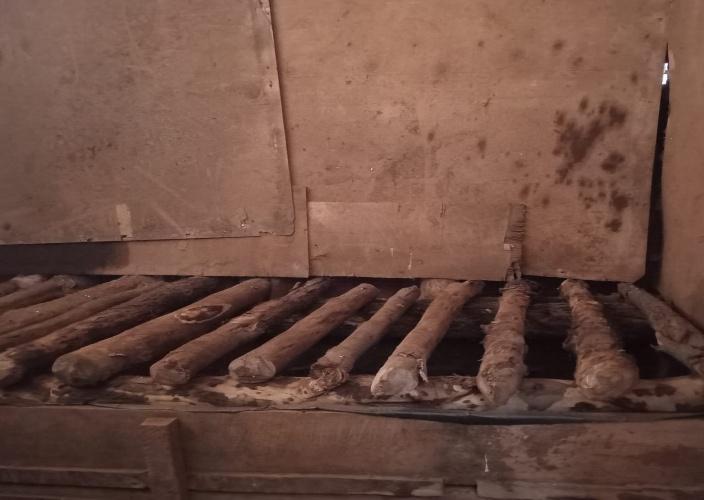
The establishment of a successful oyster mushroom farm requires both an organized farm layout and essential equipment to ensure optimal growth conditions. The farm setup begins with the cultivation space, which is an enclosed area or shelter that provides protection from direct sunlight, rain, pests, and contamination. The space is equipped to maintain suitable temperature,…
-
6. Setting up the gardens Nov 2025
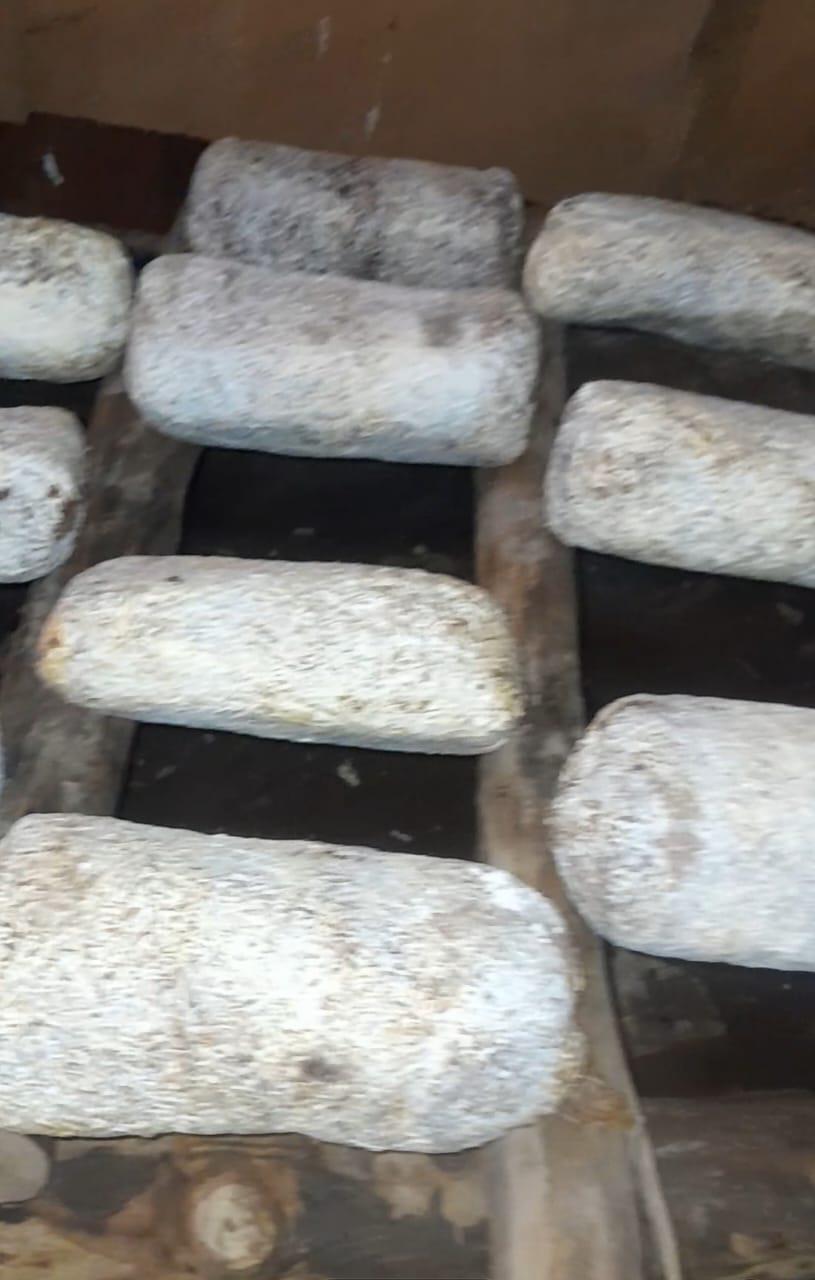
After the collection of the mushroom gardens, the growing beds were carefully assembled and placed on the constructed benches. This arrangement ensures proper airflow, spacing, and accessibility for maintenance. The benches were designed to provide a stable and elevated surface, protecting the substrate from pests, soil contamination, and excessive moisture, while allowing optimal conditions for…
-
7. Production and Harvesting December 2025
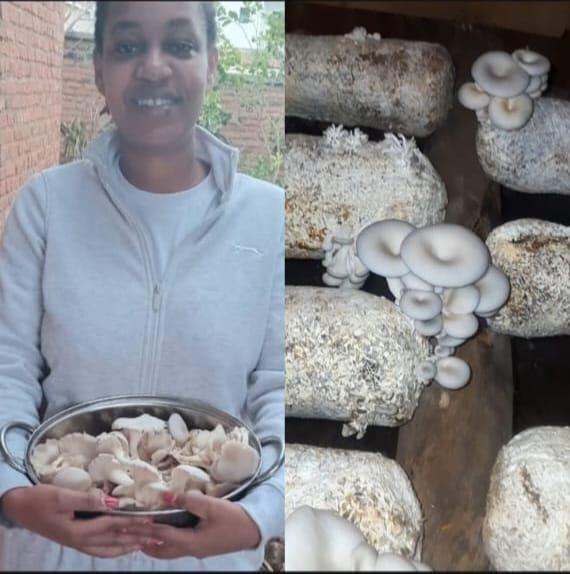
The first cycle of harvest yield 5.5kg. Much attention was paid to ventilation, humidity and cleanliness of the growing room to prevent any bacteria. The first harvest was of good quality and provides a good basis for expanding the activities.